Feature · 6 min read
Is Asahikawa the right base for riding central Hokkaido?
Asahikawa puts five ski areas within about an hour and a quarter of one hotel room, and the city's shoyu ramen is waiting when you get back. Here's how far each hill sits and what the commute costs.
By Adam BognarPublished

Asahikawa is the best-placed city in Hokkaido for riding a different hill every day, and it suits riders with a car or the patience for a rural bus timetable. Every day starts with a drive or a bus, because no ski area sits within walking distance and the closest one, Kamui Ski Links, is about half an hour away by car.
From one room in Asahikawa you can reach a cheap town hill, a powder hill, two ropeways onto the Daisetsuzan volcanoes and Furano's long groomers. We set them side by side.
| Hill | From Asahikawa by car | By bus or train | Adult price (season) | Suits | Drawback |
|---|---|---|---|---|---|
| Kamui Ski Links | About 30 min | Dohoku Bus 455, about 40 min, ¥1,000 | ¥5,300 day (2025/26) | Trees and ungroomed courses inside the boundary | Out-of-bounds riding is prohibited |
| Pippu | About 35 min | Dohoku Bus, about 1 hr 05 min | ¥3,800 day with an onsen bath (2025/26) | Cheap day and night laps | 330 m of vertical |
| Furano | About 1 hr | JR to Furano, then a taxi of about ¥1,600 | ¥8,000 day (2025/26) | 839 m of fall line and night riding | The dearest ticket of the five |
| Asahidake | About 1 hr | Ideyu-go bus, about 1 hr 40 min | ¥2,800 ropeway return (Nov–May), cash | Guided backcountry | Nothing is patrolled or avalanche controlled |
| Kurodake | About 1 hr 15 min | Dohoku Bus to Sounkyo, about 110 min | ¥5,200 ski day pass with ropeway | Alpine touring with a guide | One chair with 220 m of vertical |
Which hills can you ride on a day trip from Asahikawa?
Kamui is the closest hill and the one to ride most days. It catches cold, dry inland snow and leaves about a third of its 26 courses ungroomed, and the resort's site lists a ¥5,300 adult day pass that hasn't changed since September 2024. Deep Powder starts from a gate beside Lift 5. That lift stops at 15:00, so ride the steep laps first. Every ticket needs a ¥500 IC-card deposit, and you get it back when you return the card.
Pippu is the town hill north of the city. In 2025/26 a ¥3,800 day ticket included a bath at Yuyu Pippu next door, and night riding ran 16:00–20:30 through February for ¥1,200. It suits a short day after a long drive, and the vertical runs out quickly.
Furano is the hill for riders who want long groomed runs and five patrol-managed forest exits. It's an hour south and charged ¥8,000 for a 2025/26 day. Furano town has its own restaurants and hotels, and a few nights there save you the drive.

How do you reach Asahidake and Kurodake from the city?
You drive, or you plan around a few buses a day. Asahidake lifts you to 1,600 m on Hokkaido's highest volcano, and the ropeway's winter fare is ¥2,800 return from 1 November to 31 May. Our fact sheet notes it takes cash only. The ropeway shuts from 16 November to 10 December 2026 and reopens on 11 December. Nobody patrols or controls avalanches up there, so ride it with a guide and full kit. Our Asahidake backcountry guide covers the rules.
Kurodake is the longer trip at about 66 km. Dohoku Bus takes about 110 minutes from Asahikawa Station, according to the Sounkyo Tourism Association. Most riders who come for its backcountry gate sleep in Sounkyo instead.
Why is the snow so dry in Asahikawa?
Asahikawa's snow stays dry because the city sits in an inland basin that traps cold air. It recorded minus 41.0 °C on 25 January 1902. The Japan Meteorological Agency still ranks that as the lowest temperature in its national records. On still mornings the snow squeaks underfoot and diamond dust hangs over the river.


Where should you eat ramen in Asahikawa?
Asahikawa ramen is a shoyu bowl. Cooks make it with a double stock of pork and seafood and seal it under a layer of lard that keeps it hot. Hachiya has made it since 1947, and the Gojo shop stands where the family started. Burnt lard gives the bowl a smoky, bitter edge. It closes on Thursdays, and the guide listings tell you to phone ahead. Ramenya Tenkin on 4-jō is the other benchmark and serves gyōza on the side. Shoga Ramen Mizuno created ginger ramen, and it suits a weekday lunch because it shuts on Wednesdays and weekends.
Dinner is lamb or chicken. Daikokuya grills fresh, unmarinated lamb for Genghis Khan, and you should expect a queue. At Ginneko the dish is shinkoyaki, where a young half-chicken is grilled black with sweet sauce and pepper. It closes on Mondays and holidays. Dokushaku Sanshiro has poured Hokkaido sake over a counter of local fish since 1946. It closes on Sundays, Mondays and holidays, which rules it out for many weekend trips. For beer, Taisetsu Ji Beer brews with Daisetsuzan groundwater in a red-brick warehouse near the station.

What can you learn about the Ainu in Asahikawa?
The city's own name is Ainu. The Asahikawa City Museum explains that it comes from the Ainu name of the Chubetsu River, which settlers heard as chuk-pet. In 1890 the name was read as cup-pet, which means "sun river", and written as 旭川 for "rising-sun river". The museum also gives cuk-pet for "autumn river", after the autumn salmon, and ciw-pet for "river of waves". It doesn't rank them, and no reading is settled.
The Kawamura Kaneto Ainu Memorial Museum is one of the oldest Ainu museums in Hokkaido. According to Japan's tourism agency, Kawamura Itakishiroma, head of Cikapuni Kotan, built it beside his home in 1916 to correct visitors' misconceptions about Ainu culture. His son Kaneto ran it from 1944, and the founder's great-grandson Haruto runs it today. The Asahikawa Ainu Association is a member of the Ainu Association of Hokkaido.
What's on in Asahikawa in winter?
The 68th Asahikawa Winter Festival runs from 6 to 11 February 2027 and builds its giant snow stage by the Asahibashi bridge. Asahiyama Zoo opens for winter from 11 November 2026 to 7 April 2027, 10:30–15:30. An adult ticket cost ¥1,000 as of October 2026, and the king penguins start their walk through the snow once enough has fallen, usually from mid to late December.
Where should you stay in Asahikawa?
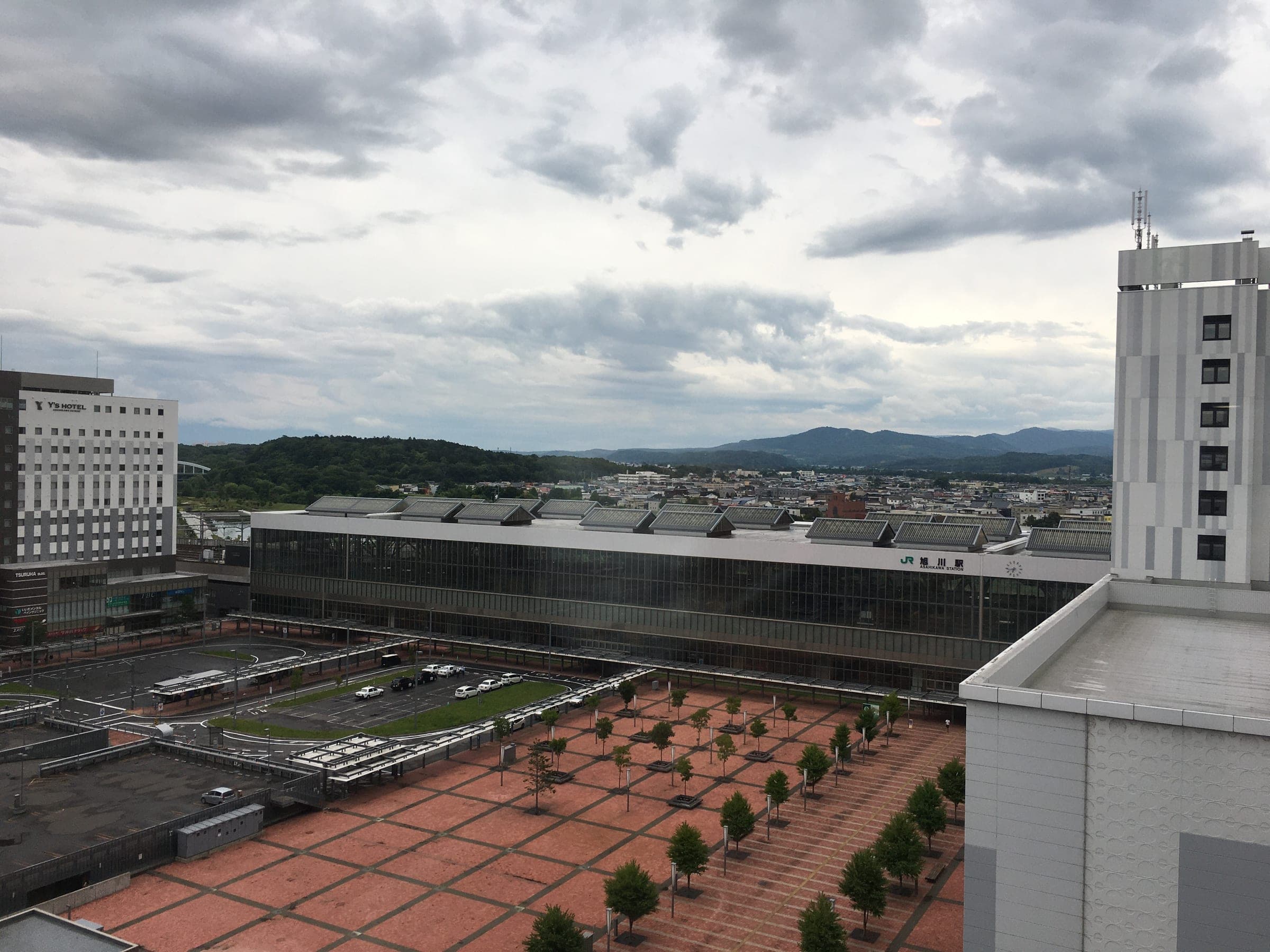
OMO7 Asahikawa suits riders hopping between hills by car. Hoshino Resorts runs it with 237 rooms and a Sauna Plateau, and its L-shaped beds leave room underneath for board bags. It's 13 minutes on foot from JR Asahikawa Station, and the rooms are compact.
JR Inn Asahikawa suits riders on buses and trains. You walk from the station's north exit through the AEON Mall to the lobby, so the board bag never touches the snow. The shared bath has a semi-open-air tub. Singles measure 17 square metres, and breakfast costs ¥1,800 extra.
How we put this together
In October 2026 we read the resorts' and ropeways' own pages, the Asahikawa City Museum's place-name boards, the Japan Meteorological Agency's records, the festival and zoo pages and our fact sheets for each hill and stay. Prices are adult tickets for the season named. The method is desk research, and nobody visited Asahikawa for this piece.
Sources
- Kamui Ski Links
- Daisetsuzan Asahidake Ropeway
- Sounkyo Kurodake Ropeway
- Sounkyo Tourism Association: access
- Japan Meteorological Agency: national records
- Asahikawa City Museum: the name Asahikawa
- Japan Tourism Agency: the Kawamura family
- Ainu Association of Hokkaido: regional associations
- Asahikawa Winter Festival 2027
- Asahiyama Zoo: admission
- Rurubu: Hachiya Gojo
Quick answers
How far is Kamui Ski Links from Asahikawa?
Kamui Ski Links is about 30 minutes by car from central Asahikawa. Dohoku Bus 455 runs there from Asahikawa Station in about 40 minutes for ¥1,000, and a 2025/26 adult day ticket cost ¥5,300.
Can you reach Asahidake from Asahikawa by bus?
You can reach the Asahidake Ropeway from Asahikawa Station on the Ideyu-go bus, which takes about 1 hour 40 minutes and runs around four times a day. The winter ropeway fare from 1 November to 31 May is ¥2,800 return for adults, and the ropeway is closed from 16 November to 10 December 2026.
What is the coldest temperature recorded in Asahikawa?
Asahikawa recorded minus 41.0 °C on 25 January 1902. The Japan Meteorological Agency still lists it as the lowest temperature in its national records.
When is the Asahikawa Winter Festival in 2027?
The 68th Asahikawa Winter Festival runs from 6 to 11 February 2027. The festival builds a giant snow stage by the Asahibashi bridge each year.
We write from operators’ and agencies’ own pages, open map data and published research, and we date every fact we check. How we research.
